
The Tiny Habit Loop
A behavioral scientist's framework for making habits that actually stick.
0 Likes
65 Views
7 cards
4 min read
Cards
Here is a truth most people miss: Willpower is a finite resource. If you are relying on motivation to change your behavior, you are setting yourself up to fail.
The research is clear. Studies from Stanford's Behavior Design Lab show that lasting change comes from redesigning your environment, not from white-knuckling through cravings.
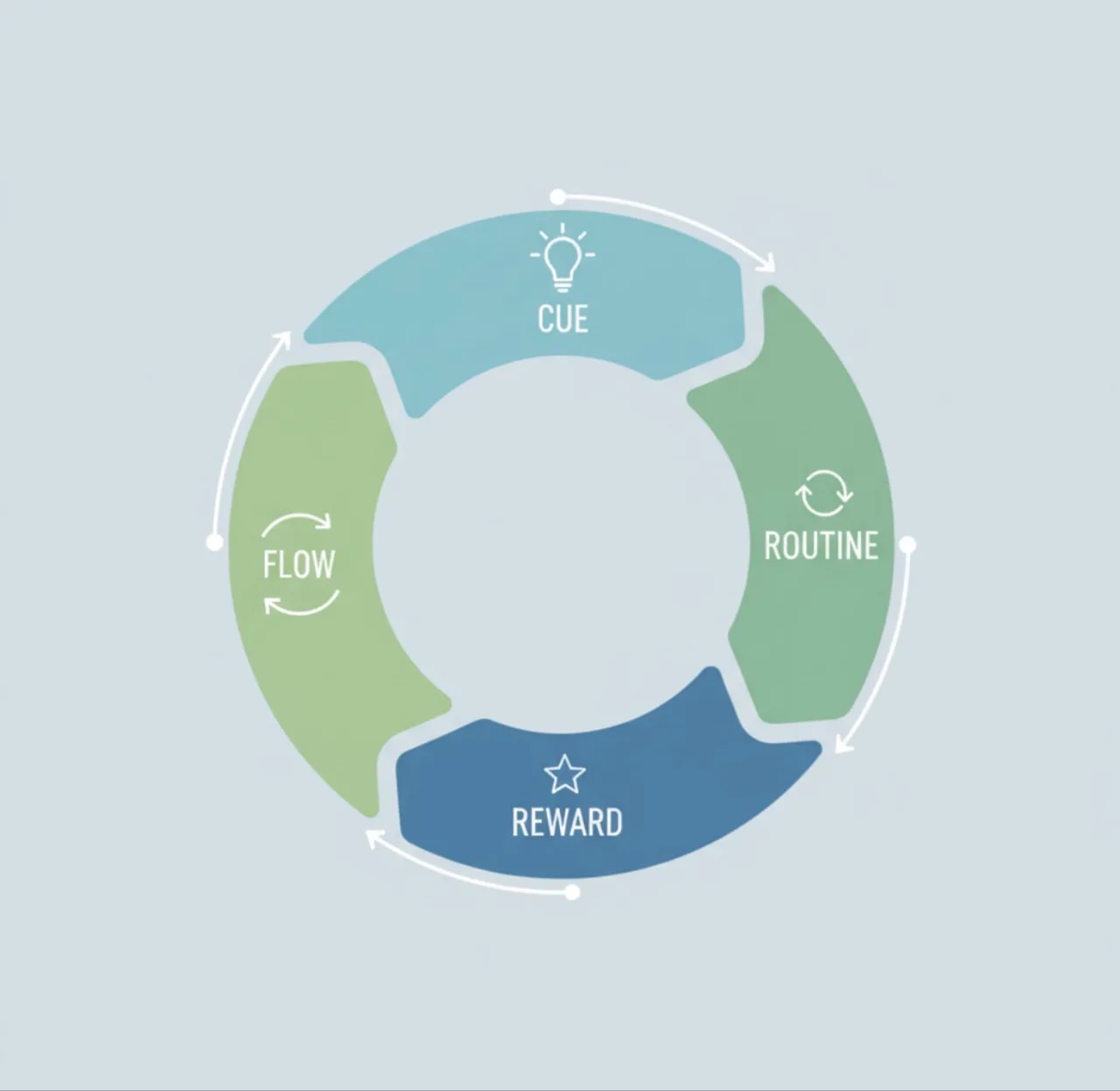
The Habit Loop (Duhigg's Framework):
1. THE CUE: The trigger that starts the behavior
2. THE ROUTINE: The behavior itself
3. THE REWARD: The positive reinforcement that makes it stick
The Key Insight: Anchor new habits to existing ones. Use this formula:
'After I [CURRENT HABIT], I will [NEW TINY HABIT].'
Make the new habit so small it is impossible to fail.
Examples:
- 'After I pour my morning coffee, I will write down my #1 priority.'
- 'After I sit down on the train, I will take three deep breaths.'
- 'After I close my laptop, I will put my running shoes by the door.'
The question to ask yourself: What is the smallest version of this habit that I could do even on my worst day? Start there. Consistency beats intensity every time.