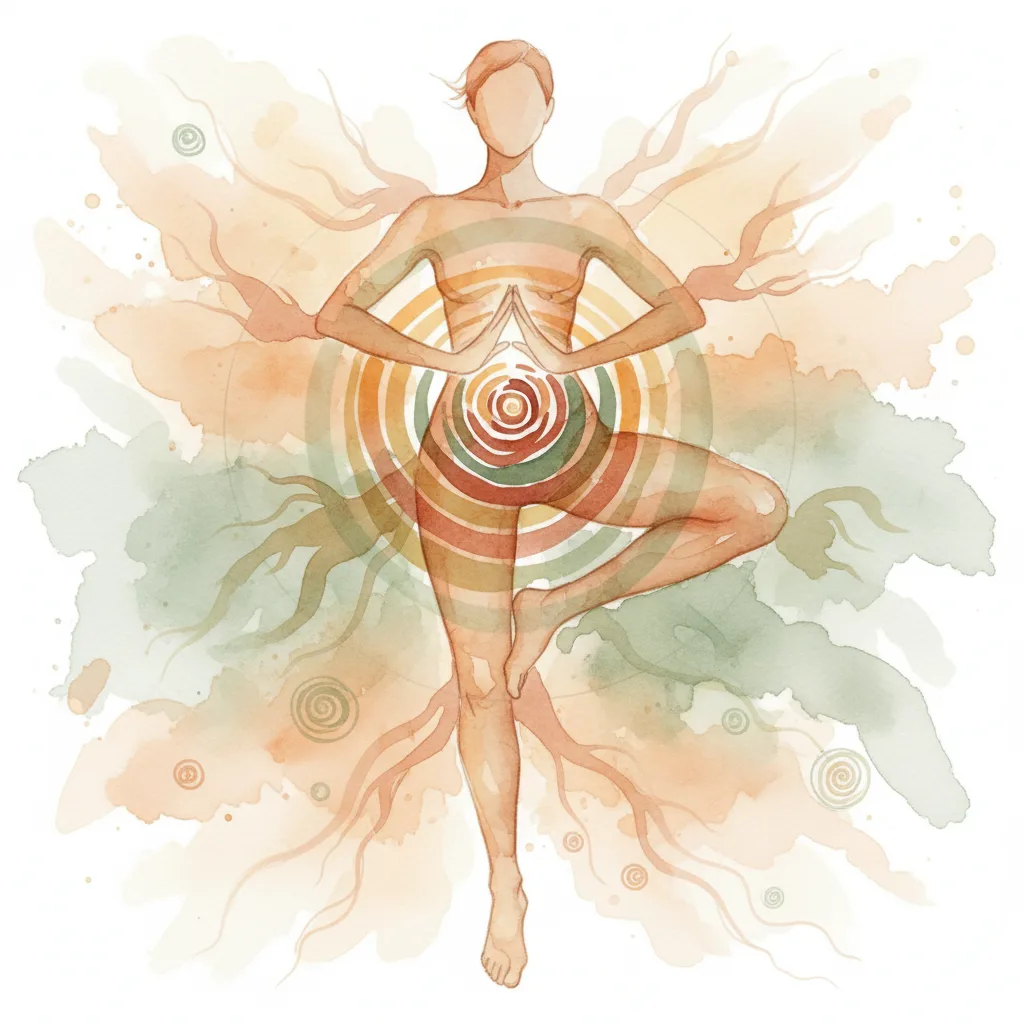

The Unshakeable Core: Stability for a Pain-Free Life
Forget crunches. True core stability is about control, not just muscle. This deck cuts through the noise, offering evidence-based insights and practical exercises to build a resilient core, prevent pain, and move with confidence. Professional guidance, no-nonsense application.
When you hear 'core stability,' what comes to mind? For most, it's a six-pack, endless crunches, or a grueling gym routine. But as a chiropractor and movement specialist, I can tell you that common perception misses the mark entirely.
True core stability isn't just about superficial muscle bulk. It's about your body's ability to maintain control of your spine and pelvis during movement and static positions. It's about how your deep abdominal muscles, diaphragm, pelvic floor, and multifidus work together in a coordinated fashion to create a stable foundation for everything you do.
Think of your core as a cylinder, not just a front wall. The diaphragm forms the top, the pelvic floor the bottom, and the transverse abdominis and multifidus wrap around to form the front and back walls. When these components work synergistically, they create a pressure system that protects your spine.
This integrated system is what allows you to lift, twist, bend, and even stand upright without undue stress on your back. Ignoring this holistic view and focusing only on visible 'abs' is like trying to build a house by only framing the front door – it just won't stand.
Let's talk briefly about the key players. While it's not a full anatomy lesson, understanding these helps:
- Transverse Abdominis (TA): Your body's natural corset. It wraps horizontally around your waist, pulling everything in and providing deep spinal support. It's often asleep in those with back pain.
- Multifidus: Small, deep muscles along your spine. They provide segmental stability, sensing and reacting to small movements.
- Pelvic Floor Muscles: At the base of your core cylinder, providing support for organs and working with the diaphragm and TA.
- Diaphragm: Your primary breathing muscle, also crucial for creating intra-abdominal pressure (IAP) – a key component of stability.
The magic happens when these work as a team.
The single most important skill for core stability is learning to create and manage intra-abdominal pressure (IAP). This isn't just 'holding your breath,' it's about bracing and co-contracting your deep core muscles while maintaining natural breathing.
Here's a simple way to practice: Place one hand on your chest and the other on your belly. Take a deep breath, focusing on expanding your belly laterally (out to the sides) rather than just pushing it forward. As you exhale, gently draw your belly button towards your spine without sucking in forcefully. You should feel a sense of firmness around your entire midsection. Practice this throughout your day, especially before lifting or exerting yourself.
Foundational Exercise 1: The Dead Bug
This exercise might look simple, but it's fantastic for training anti-extension (preventing your lower back from arching) and coordination without loading the spine.
- Lie on your back with knees bent, feet flat. Press your lower back gently into the floor.
- Lift your arms straight up towards the ceiling and your knees directly over your hips, shins parallel to the floor (tabletop position).
- Slowly extend one arm overhead towards the floor and the opposite leg straight forward, hovering above the floor. Keep your lower back pressed down – no arching!
- Bring them back to the start and repeat on the other side. Aim for 3 sets of 8-12 reps per side, moving slowly and with control.
Foundational Exercise 2: The Bird Dog
The Bird Dog trains anti-rotation and stability on all fours, simulating real-life movements where your limbs move independently of a stable torso.
- Start on your hands and knees, hands under shoulders, knees under hips. Keep your spine neutral (not arched or rounded).
- Engage your core gently – imagine bracing for a light punch.
- Slowly extend one arm forward and the opposite leg straight back, keeping your torso still and level. Don't let your hips rotate or lower back arch.
- Hold for a second, then slowly return to the start. Repeat on the other side. Aim for 3 sets of 8-12 reps per side, focusing on stability over height.
Foundational Exercise 3: Side Plank
Many core programs neglect the lateral (side) stability of the core. The side plank is excellent for strengthening the obliques and quadratus lumborum, crucial for preventing side bending and rotation, particularly important in walking and carrying.
- Lie on your side, propped up on your forearm. Elbow should be directly under your shoulder. Stack your feet, or place your top foot in front of the bottom for more stability.
- Lift your hips off the floor until your body forms a straight line from head to heels. Avoid letting your hips sag or rotate.
- Hold for 20-30 seconds, then repeat on the other side. Build up to 3 sets per side. For a challenge, try lifting your top arm or leg.
Foundational Exercise 4: Plank
The classic plank is still a powerful exercise for training anti-extension. The goal isn't to hold it forever, but to maintain perfect form for a controlled duration.
- Start on your forearms and toes, body in a straight line from head to heels. Elbows should be directly under your shoulders.
- Engage your core – brace as if you're about to be hit. Squeeze your glutes. Avoid letting your hips sag towards the floor or pike up towards the ceiling.
- Maintain a neutral spine. Focus on quality over duration. Aim for 3 sets of 30-60 second holds, ensuring your form remains impeccable throughout. If you feel it primarily in your lower back, reset and focus on core engagement.
Once you've mastered the basic stability exercises, the next step is to integrate that stability into more dynamic movements. This means learning to maintain your core brace while your limbs are moving, or while under slight load.
- Try adding light weights to your Bird Dog (ankle/wrist weights).
- Perform farmers' carries – walk with heavy dumbbells in each hand. This taxes your entire core for anti-lateral flexion.
- Incorporate rotational exercises like Pallof presses (using a cable machine or resistance band) to train anti-rotation.
- Always apply the 'brace' principle you learned earlier before initiating movement, especially when lifting anything.
Remember, your core doesn't work in isolation; it works to support your limbs.
The ultimate goal of core stability training isn't just to do exercises in the gym; it's to improve how you move through life. Here's how to integrate it:
- Sitting: Maintain a gentle core brace to prevent slouching. Imagine a string pulling your head towards the ceiling.
- Lifting: Before you lift anything, brace your core. Don't just lift with your back. Bend your knees, keep the object close, and use your legs.
- Walking: Even walking benefits. Think about maintaining an upright posture and a gentle core engagement, letting your arms swing freely.
- Reaching: Instead of letting your spine do all the work, brace and let your hips and shoulders move, maintaining a stable trunk.
Conscious effort leads to unconscious good habits.
Posture and core stability are inextricably linked. A weak or disengaged core often leads to poor postural habits like slumping, arching your lower back excessively, or hunching your shoulders.
When your deep core muscles are functional, they act as an internal support system, making it easier to maintain an upright, neutral spine without excessive conscious effort. This reduces strain on passive structures like ligaments and discs, which can otherwise be a source of chronic pain.
By building a truly stable core, you're not just 'fixing' a posture; you're building a foundation for effortless, resilient posture that lasts.
A stable core is arguably your best defense against many common types of musculoskeletal pain, especially lower back pain.
- Reduces Spinal Load: When your core is weak, other muscles (like those in your back or hips) have to work overtime to stabilize your spine, leading to fatigue and strain.
- Improves Movement Patterns: A stable core allows for more efficient and less stressful movement of your limbs, preventing compensatory movements that can lead to pain in areas like the hips, knees, and shoulders.
- Enhances Injury Resilience: Whether it's lifting groceries, playing sports, or simply bending over, a properly braced and stable core dramatically lowers the risk of acute injury.
Think of it as investing in your body's long-term structural integrity.
Avoid these common missteps that can hinder your progress or even lead to injury:
- Holding your breath: True IAP management allows for breathing. Don't go blue in the face!
- Over-arching your back: Especially in planks or Bird Dogs. This disengages the core and puts stress on your lower back.
- Rushing reps: Stability work requires control and slow, deliberate movements. Speed often sacrifices form.
- Ignoring pain: If something hurts, stop. Pushing through sharp pain is never the answer. Consult a professional.
- Only doing crunches: Remember the 'cylinder' concept. You need to train anti-extension, anti-flexion, and anti-rotation.
Quality over quantity, always.
Like any muscle group, your core responds to consistent effort. You won't achieve an unshakeable core by doing a few exercises once a week. Aim for:
- Regularity: Integrate core work 3-5 times a week. Even 10-15 minutes of focused effort can make a huge difference.
- Progression: As you get stronger, challenge yourself appropriately. Increase holds, reps, sets, or introduce more complex variations.
- Mind-body connection: Really focus on feeling your core muscles engage. This neural connection is vital.
- Patience: Building deep core strength takes time. Celebrate small victories and stick with it. The payoff in reduced pain and improved movement is worth it.
While this deck provides a solid foundation, some situations warrant professional guidance:
- Persistent pain: If your pain isn't improving with consistent effort, or if it's getting worse, a chiropractor or physical therapist can diagnose underlying issues.
- Post-injury or surgery: Rehabilitation programs are best tailored by a specialist.
- Difficulty engaging muscles: If you struggle to feel your deep core muscles or perform the exercises correctly, hands-on guidance can be invaluable.
- Specific movement goals: For athletes or those with highly specific demands, advanced training may be needed.
Don't hesitate to seek expert advice when needed. Your body is your most important asset.
Building an unshakeable core isn't about vanity; it's about building a more functional, resilient, and pain-free body. It's an investment in your long-term health and quality of life.
Start today. Pick 2-3 exercises from this deck, commit to practicing them consistently, and focus on form over everything else. Listen to your body, be patient with yourself, and remember that every small step towards better stability is a step towards feeling stronger, moving better, and living without unnecessary pain.
Take control of your core, and you take control of your movement health.