
The Identity-Behavior Gap: Why You Can't Hack Your Way to Change
Most productivity advice treats symptoms. Here's a framework for the actual disease — and why identity precedes habits.
0 Likes
74 Views
7 cards
4 min read
Cards
Every January, millions of people set goals. By February, most have quit.
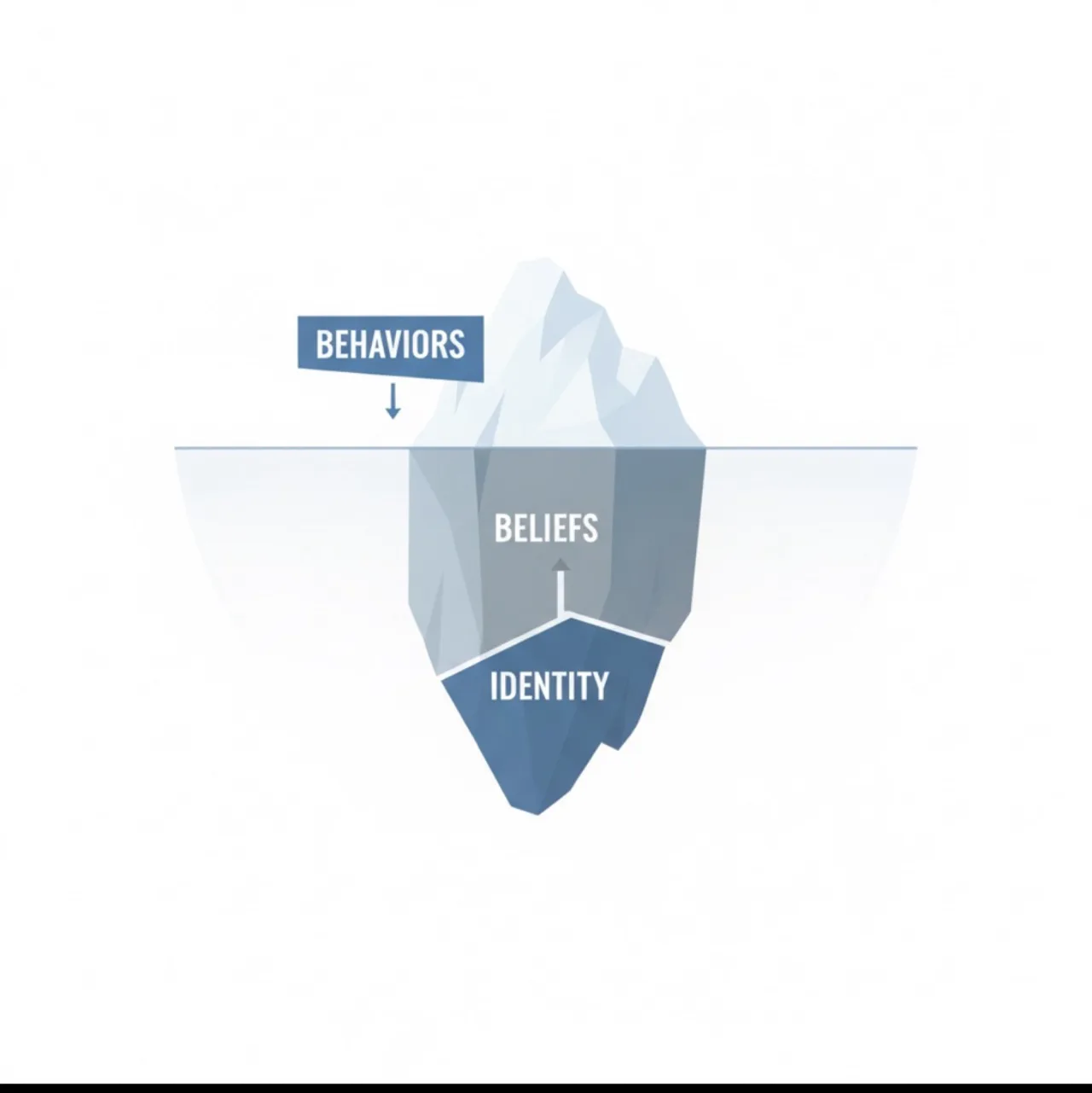
The standard explanation is "lack of discipline." But that's lazy analysis. The real problem is architectural: they're building habits on top of an identity that doesn't support them.
THE IDENTITY-BEHAVIOR GAP
Here's the framework:
Level 1: OUTCOMES — What you want (lose 20 lbs, write a book, launch a business)
Level 2: PROCESSES — What you do (meal prep, write daily, build an MVP)
Level 3: IDENTITY — What you believe about yourself
Most people start at Level 1 and try to work backward. They set outcome goals and bolt on processes.
The people who actually change? They start at Level 3.
CASE STUDY:
Two people are offered a cigarette.
Person A says: "No thanks, I'm trying to quit."
Person B says: "No thanks, I'm not a smoker."
Same behavior. Radically different internal architecture.
Person A is still fighting their identity. Person B has already changed it. The behavior is just a byproduct.

THE PRACTICAL PROTOCOL:
1. Define the identity FIRST
Don't ask "What do I want to achieve?" Ask "Who is the type of person who achieves this?"
→ Want to write a book? Become "a writer" first.
→ Want to get fit? Become "someone who doesn't miss workouts" first.
2. Cast votes for that identity
Every action is a vote. You don't need a unanimous election — you need a majority. Each small action that aligns with your target identity is a vote. Miss a day? That's one vote for the old identity. Get back to it? Two votes for the new one.
3. Detach from outcomes, attach to systems
Outcomes are lagging indicators. You can't control them directly. But you can control the system. "I write 500 words every morning" beats "I want to finish my book by June."
THE UNCOMFORTABLE TRUTH:
Your current results are a perfect reflection of your current identity. Not your goals. Not your intentions. Your identity.
If you want different results, you don't need a better planner. You need to interrogate the beliefs running your operating system.
Ask yourself: What identity am I currently reinforcing with my daily actions? Is that the person who gets where I want to go?
If not, the fix isn't another hack. It's an honest reckoning with who you've been choosing to be.
FURTHER READING:
• James Clear, Atomic Habits (Chapters 1-3 on identity-based habits)
• BJ Fogg, Tiny Habits (the behavior model that underpins this)
• Mark Manson, "The Subtle Art" (on choosing what to give a damn about)
These aren't self-help books. They're operating manuals for your brain. Read them like textbooks, not novels.