Praying for More Workers
Matthew 9:35–38 • Pray for workers who notice people, care deeply, and share the good news of Jesus.
The harvest needs workers
Matthew 9:35–38 presents a great need and a clear response. Jesus sees people who need his care and message, yet too few workers are going to them. His instruction begins with earnest prayer that God would send more people into that work.
A shortage of willing hands
The sermon opens with the example of industries needing more skilled welders: important work remains unfinished when there are too few workers. Jesus identifies a spiritual shortage. The need is not simply for more listeners, but for disciples willing to put what they hear into practice.
The mission belongs to God
Jesus directs prayer to the Lord of the harvest. God is already at work, and the people we hope to reach matter to him. That keeps the church dependent on his power rather than confident only in its own planning, energy, or ability to persuade.
Pray with earnest desire
The pastor compares earnest prayer with children persistently asking their father for something they deeply want. Jesus calls for more than a passing mention. Let the spiritual need of others move you to serious, heartfelt prayer for people who will bring them the gospel.
Three qualities to pray for
The sermon identifies three qualities in workers who follow Jesus’ example:
- See people instead of overlooking them.
- Sympathize with their struggles.
- Share the good news of Christ.
Pray for God to cultivate these qualities in the church—and in you.
See the person in front of you
Jesus paid attention to people while carrying out his ministry. He did not allow the demands of the work to hide the people the work was meant to serve. Begin by noticing the faces, needs, and conversations that are already crossing your path.
Keep your head up
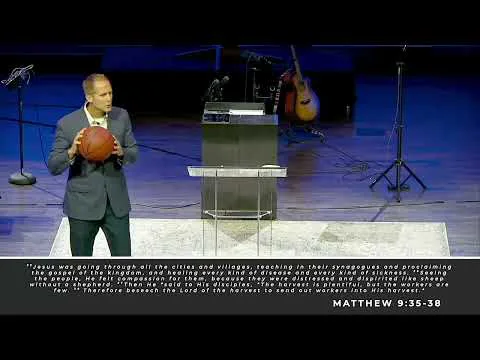
A basketball player who watches only the bouncing ball misses teammates, defenders, and openings. The pastor uses this picture to describe a crowded life: appointments, work, and family concerns can absorb our attention. Handle your responsibilities while keeping your eyes open to the people around you.

Like a player who looks up, stay attentive to people while carrying your responsibilities.
Your everyday place is a mission field
The sermon especially addresses teachers, school staff, and students returning to classrooms. The principle extends to daily work and neighborhood life: people are already present. Ask God to help you notice them in the middle of your ordinary responsibilities rather than waiting for a special occasion.
Allow concern to move inward
In Matthew 9:36, seeing the crowd leads Jesus to compassion. He is not detached from what people are experiencing. Pray for more than accurate observations about someone’s problems. Ask for a tender heart that becomes personally concerned enough to respond with care.
People need a shepherd
Jesus sees the crowd as worn down and without adequate guidance or protection. The picture of sheep without a shepherd points to vulnerability and need. People are not interruptions or projects. They are human beings whom God values, and their suffering deserves our attention.
Compassion has a cost
The pastor uses a humorous television illustration to contrast dismissing a need with stopping to help. The point is serious: caring may interrupt your plans and require something from you. Resist treating a person as a nuisance simply because responding would be inconvenient.
Make compassion practical
- Listen carefully to the struggle.
- Support the person with your presence.
- Meet a practical need when you can.
- Pray about what they are facing.
These ordinary actions communicate concern and open space for a relationship marked by genuine care.
Care and proclamation belong together
Jesus taught, healed, and announced the good news. His compassion did not make him silent about people’s spiritual need. The sermon calls the church to hold practical care and gospel witness together: help people with what they face while pointing them toward Christ.
Keep the gospel central
In the account from Mark 1, Jesus leaves a place of pressing needs to preach in other towns. He remains clear about his mission. Good works matter, but the church must also explain who Jesus is and why his death and resurrection are good news.
Help the person, share the hope
The pastor describes meeting a young woman experiencing homelessness. The church provided practical help while he also explained the gospel. The example brings the three qualities together: notice the person, care about the situation, and speak clearly about the hope offered in Christ.
Turn a conversation toward Christ
Ask God for an opening in an ordinary conversation this week. Listen first, then speak naturally about Jesus and the person’s spiritual questions. Romans 10:14 reminds the church that people need to hear about the one they are being invited to trust.
Be willing to become the answer
After instructing the disciples to pray, Jesus sends them out in Matthew 10. Those praying for workers must also be willing to go.
Response: Pray for pastors, missionaries, teachers, students, and everyday believers. Then offer your own availability to see, care, and share.