Koinonia in Action: Building a True Gospel Community
Beyond just attending, what does it mean to truly belong and contribute to God's family? This study explores the biblical call to <em>Koinonia</em> – authentic, Christ-centered community – and how we can live it out today.
Grace and peace to you, Northpoint Chapel. Today, we're diving deep into a concept that’s central to what it means to be the church: koinonia. You might hear it translated as "fellowship," but it's far richer than just coffee and conversation after service. Koinonia implies a profound sharing, a communion, a participation in something together – specifically, in Christ.
It's about mutual dependence, shared life, and a common purpose rooted in the gospel. It’s not just a nice idea; it's God’s design for us, essential for our spiritual health and for our witness to the world.
Here, in Acts 2:42, we see the early church living out koinonia in its purest form. They "devoted themselves to the apostles’ teaching and to fellowship." Notice the word "devoted." This wasn't a casual add-on; it was their priority. They understood that sound doctrine, taught by those who had walked with Jesus, was the foundation for their shared life.
And "fellowship" here, koinonia, means they shared life deeply. Not just friendly greetings, but mutual commitment, sharing resources, and being present for one another in profound ways. It wasn't merely social; it was spiritual solidarity.
The verse continues, "and to the breaking of bread and to prayer." These weren't separate activities but integral expressions of their shared life in Christ. "Breaking of bread" likely refers to both common meals and the Lord's Supper, a tangible expression of their unity around Christ's sacrifice. And their devotion to "prayer" wasn't solitary; it was corporate, an act of communal worship and intercession.
Think about it: shared learning, shared life, shared meals, shared prayer. These aren't just activities; they are habits that build profound connection and reveal the very heart of the church as a spiritual family.
13 For in one Spirit we were all baptized into one body, whether Jews or Greeks, slave or free, and we were all given one Spirit to drink.
14 For the body does not consist of one part, but of many.
15 If the foot should say, “Because I am not a hand, I do not belong to the body,” that would not make it any less a part of the body.
16 And if the ear should say, “Because I am not an eye, I do not belong to the body,” that would not make it any less a part of the body.
17 If the whole body were an eye, where would the sense of hearing be? If the whole body were an ear, where would the sense of smell be?
18 But in fact, God has arranged the members of the body, every one of them, according to His design.
19 If they were all one part, where would the body be?
20 As it is, there are many parts, but one body.
21 The eye cannot say to the hand, “I do not need you.” Nor can the head say to the feet, “I do not need you.”
22 On the contrary, the parts of the body that seem to be weaker are indispensable,
23 and the parts we consider less honorable, we treat with greater honor. And our unpresentable parts are treated with special modesty,
24 whereas our presentable parts have no such need. But God has composed the body and has given greater honor to the parts that lacked it,
25 so that there should be no division in the body, but that its members should have mutual concern for one another.
26 If one part suffers, every part suffers with it; if one part is honored, every part rejoices with it.
27 Now you are the body of Christ, and each of you is a member of it.
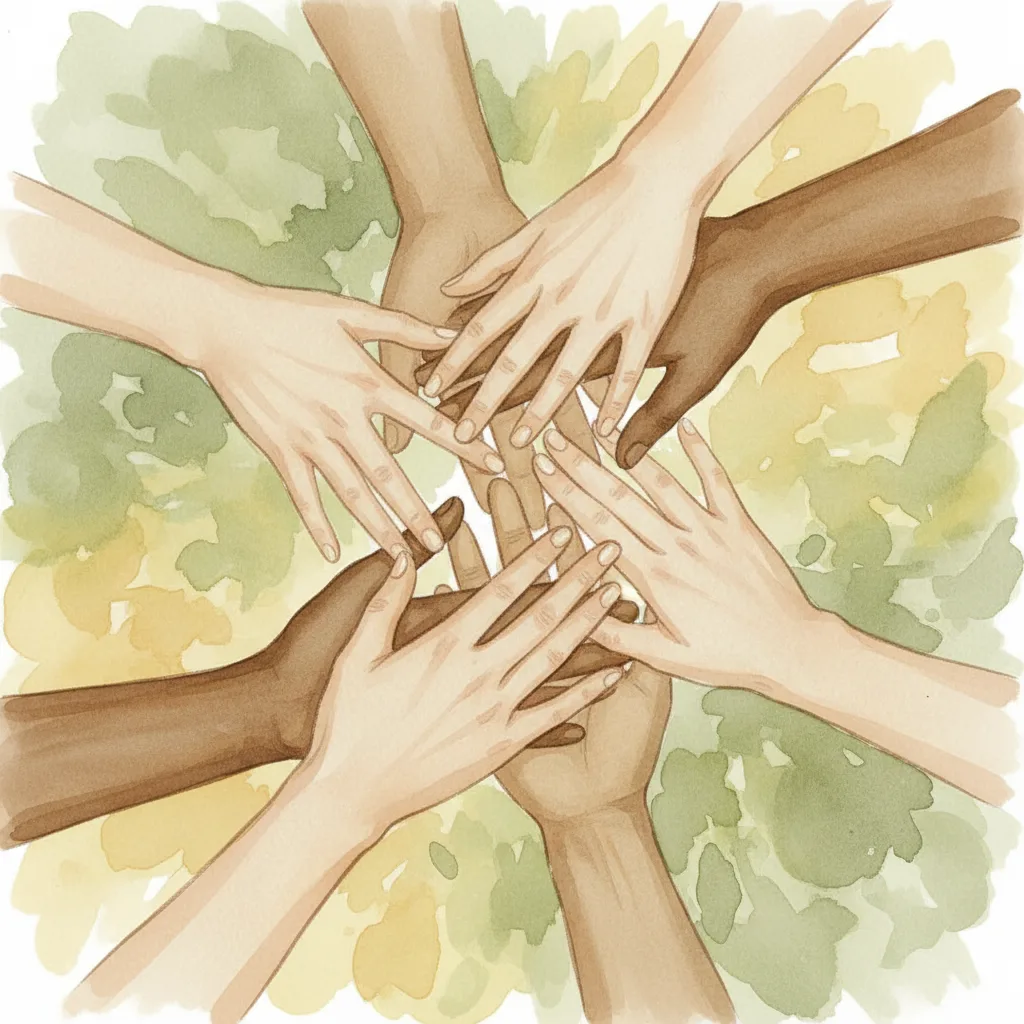
Paul’s analogy of the church as one body with many members in 1 Corinthians 12 is a powerful picture of koinonia. "For just as the body is one and has many members, and all the members of the body, though many, are one body, so it is with Christ." Each part – eye, ear, hand, foot – is distinct, yet essential. There's no room for hierarchy or dismissiveness; every member has inherent dignity and purpose.
This passage challenges us to move beyond seeing ourselves as isolated individuals attending a service, and instead to embrace our interconnectedness. We are not just individual bricks; we are a living, breathing organism designed to function together.
What does this mean for us practically? It means actively recognizing and valuing the diverse spiritual gifts God has given each person in our community. Some are "hands," ready to serve; some are "eyes," discerning and teaching; some are "feet," carrying the gospel to others. No gift is superior, and no member is expendable.
Cultivating koinonia requires us to actively seek out, appreciate, and affirm the unique contributions of others, especially those who might seem "weaker" or less visible. When one part suffers, we all suffer. When one rejoices, we all rejoice. That’s true community.
25 Let us not neglect meeting together, as some have made a habit, but let us encourage one another, and all the more as you see the Day approaching.
Here's a direct command about our gathering: "And let us consider how to stir up one another to love and good works, not neglecting to meet together, as is the habit of some, but encouraging one another, and all the more as you see the Day approaching." The purpose of our assembling isn't just passive reception; it's active engagement.
We come together not merely to get something, but to give – to inspire, to provoke, to "stir up" each other towards deeper love for God and more fruitful good works in the world. This mutual exhortation is a hallmark of a healthy, growing community.
So, how do we intentionally "stir up" one another? It starts with presence – showing up consistently. Then, it moves to perception – genuinely seeing and listening to others. Finally, it culminates in proclamation – speaking words of affirmation, challenge, and gospel truth into their lives.
This isn't just about friendly conversation; it’s about engaging with intentionality. It's asking deeper questions than "How are you?" It's noticing a need and responding. It's celebrating a spiritual victory or walking alongside someone in their struggle. This kind of encouragement is the fuel for our collective journey of faith.
Frankly, building this kind of deep koinonia isn't always easy. We live in a busy, individualistic culture. Barriers include our own comfort zones, fear of vulnerability, the temptation to judge, or simply the superficiality of modern interactions. It's easier to stay on the surface, but the gospel calls us deeper.
True community demands honesty about our struggles, grace for one another's imperfections, and a willingness to extend forgiveness as Christ has forgiven us. It means being willing to be known, not just seen.
Cultivating vulnerability and authenticity within our community is critical. It’s about sharing our burdens (Galatians 6:2), confessing our sins to one another (James 5:16), and allowing ourselves to be truly seen. This isn't about airing every piece of dirty laundry, but about creating safe spaces where we can be real with our spiritual brothers and sisters.
When we open up in grace, we create opportunities for God to work through others to bring healing, wisdom, and support. It demolishes the walls we build around ourselves and allows the Spirit to knit us together more closely.
So, practically, how can we foster true gospel community at Northpoint? Start by embracing intentionality. Commit to a small group. Sign up to serve alongside others, shoulder-to-shoulder, in a ministry area. Practice intentional hospitality – inviting someone new or less known into your home for a meal. Look for opportunities to pray for and with others, not just on Sunday mornings.
These aren't programs; they are expressions of a heart devoted to koinonia. They are pathways to deepen our shared life in Christ beyond the surface.
In closing, beloved church, koinonia isn't just a theological concept; it's a divine imperative and a profound gift. God has designed us for intimate, shared life in Him and with one another. It's messy at times, glorious at others, but always essential to our growth and witness.
Let's not settle for casual acquaintances when God calls us to family. Let's devote ourselves, just like the early church, to building a gospel community where Christ is central, and every member is cherished, challenged, and deeply connected. Amen.