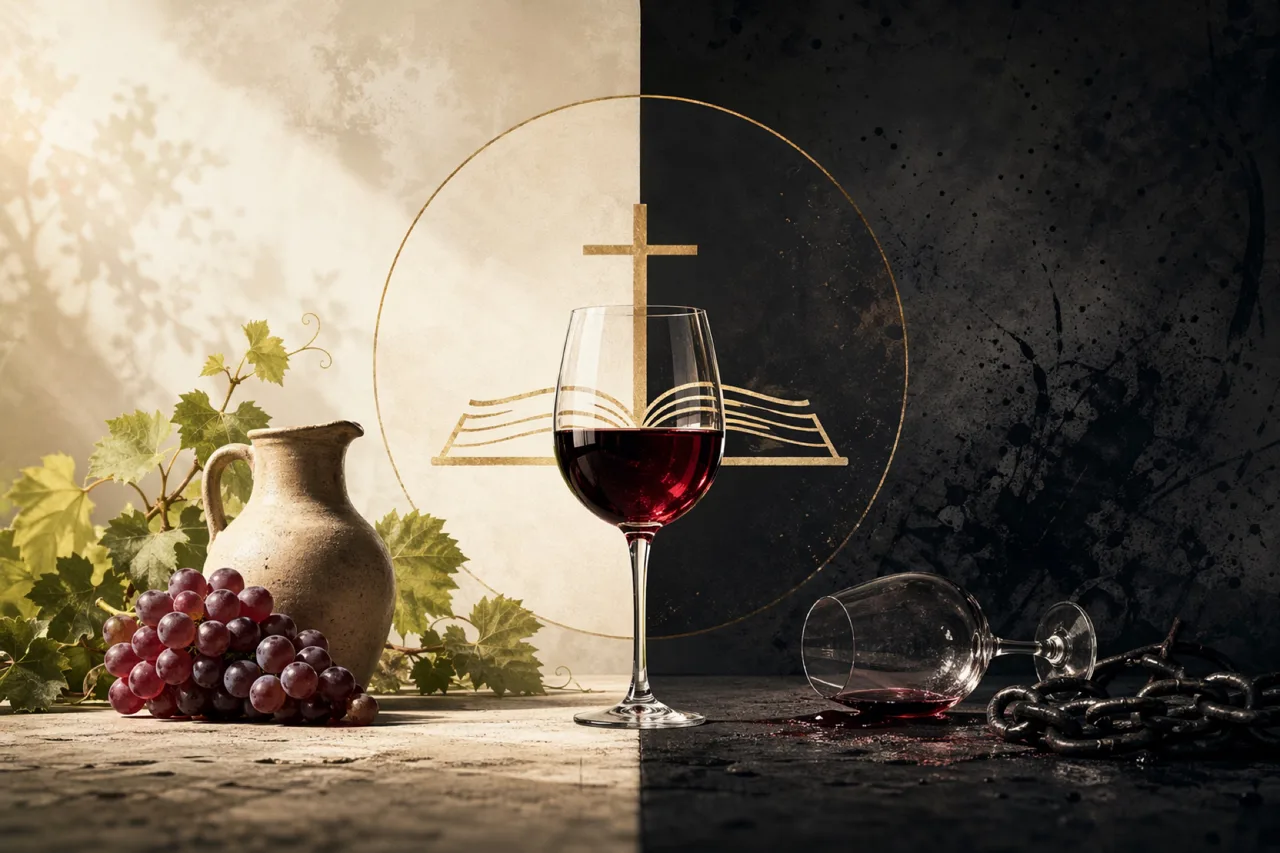

Is Drinking Alcohol a Sin? A Biblical Perspective
Explore what the Bible truly says about alcohol consumption. This deck distinguishes between enjoying wine and the sin of drunkenness, examining key scriptural examples and clarifying common misconceptions.
Unpacking a Common Question
For many, the question of whether drinking alcohol is a sin is a complex one, often met with differing opinions within faith communities. But what does the Bible itself truly say?
Let's dive into scripture to uncover a biblical perspective that might surprise you.
The Nazarite Vow: A Unique Prohibition
When we look at specific prohibitions against drinking wine or strong drink, the Bible is remarkably clear: the only people expressly prohibited were those who had taken a Nazarite vow.
This was a special, temporary vow of consecration to God, not a universal command for all believers.
2 “Speak to the Israelites and tell them that if a man or woman makes a special vow, the vow of a Nazirite, to separate himself to the LORD,
3 he is to abstain from wine and strong drink. He must not drink vinegar made from wine or strong drink, and he must not drink any grape juice or eat fresh grapes or raisins.
4 All the days of his separation, he is not to eat anything that comes from the grapevine, not even the seeds or skins.
Wine: A Gift for Joy and Celebration
Far from being universally condemned, wine is often presented in scripture as a gift from God, intended to bring joy. The Psalms speak of its ability to gladden the human heart.
It's part of God's provision, alongside bread, to sustain and delight us.
Jesus' First Miracle: Water into Wine
Perhaps one of the most compelling examples comes from Jesus Himself. His very first miracle, performed at the wedding in Cana, was turning water into a significant quantity of high-quality wine.
Biblical scholars widely agree this was fermented, alcoholic wine, not unfermented grape juice.
2 and Jesus and His disciples had also been invited to the wedding.
3 When the wine ran out, Jesus’ mother said to Him, “They have no more wine.”
4 “Woman, why does this concern us?” Jesus replied. “My hour has not yet come.”
5 His mother said to the servants, “Do whatever He tells you.”
6 Now six stone water jars had been set there for the Jewish rites of purification. Each could hold from twenty to thirty gallons.
7 Jesus told the servants, “Fill the jars with water.” So they filled them to the brim.
8 “Now draw some out,” He said, “and take it to the master of the banquet.” They did so,
9 and the master of the banquet tasted the water that had been turned into wine. He did not know where it was from, but the servants who had drawn the water knew. Then he called the bridegroom aside
10 and said, “Everyone serves the fine wine first, and then the cheap wine after the guests are drunk. But you have saved the fine wine until now!”
11 Jesus performed this, the first of His signs, at Cana in Galilee. He thus revealed His glory, and His disciples believed in Him.
The True Warning: Drunkenness, Not Drinking
It's crucial to understand that Jesus never expressly forbid drinking wine. Instead, both Jesus and other biblical authors consistently warn against drunkenness and its destructive consequences.
The distinction is vital: moderation is permissible; excess is sinful.
The Bible's concern is not with the drink itself, but with the loss of self-control and the damaging effects of intoxication.
Jesus as the Son of Man
Jesus frequently referred to Himself as the Son of Man, a title that emphasized both His humanity and His divine authority. This title appears numerous times throughout the Gospels, connecting Him to prophecies and His earthly ministry.
John the Baptist vs. The Son of Man
In a striking contrast, Jesus highlighted the differing perceptions of John the Baptist and Himself. John came with a rigorous ascetic lifestyle, abstaining from wine, and was accused of having a demon.
In contrast, Jesus, the Son of Man, came eating and drinking, and was falsely labeled a glutton and a drunkard.
19 The Son of Man came eating and drinking, and they say, ‘Look at this glutton and drunkard, a friend of tax collectors and sinners!’ But wisdom is vindicated by her actions.”
Paul's Practical Advice
Even the Apostle Paul, known for his strong moral teachings, offered practical advice regarding wine. He counseled his subordinate, Timothy, to drink a little wine for his stomach ailments.
This suggests a pragmatic approach to wine, recognizing its medicinal and perhaps even social benefits.
Living in Freedom and Responsibility
Based on a comprehensive biblical view, drinking alcohol or wine is not inherently a sin. Instead, the scripture calls believers to:
- Exercise moderation in all things.
- Avoid drunkenness and its destructive outcomes.
- Consider others and ensure our freedom does not cause a weaker brother or sister to stumble.
Our freedom in Christ is always balanced with love and responsibility.