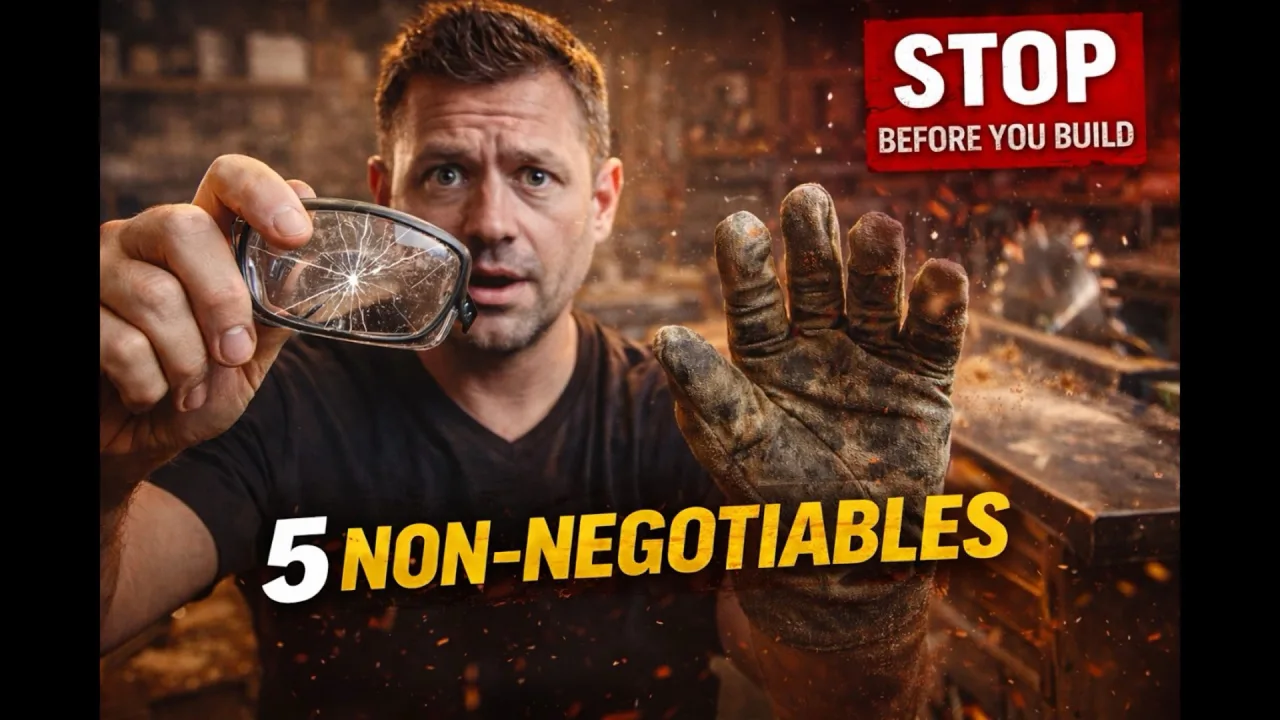

Essential Woodworking Shop Safety Gear
Before you start woodworking, learn about critical safety equipment: first aid, eye and ear protection, push sticks, respiratory masks, and protective aprons.
Before You Start: Prioritize Safety
So you want to get into woodworking and build out a shop? That's exciting! But before you buy a single tool or make your first cut, it's crucial to invest in safety equipment. This deck will guide you through the essentials to keep you safe in your workshop.
First Aid Preparedness
Accidents can happen, even to the most careful woodworker. Having a well-stocked first aid kit is non-negotiable.
- Bandages and wound care: For minor cuts and scrapes.
- Bleeding control: Have items like a tourniquet readily available for more severe injuries. Hopefully, you'll never need it, but it's vital if you do.
- Fire safety: Consider a fire blanket. You'll be dealing with flammable wood, finishes, chemicals, and electrical equipment. Being prepared for a fire is smart.
Protect Your Vision: Eyewear is Essential
Your eyes are irreplaceable. Many woodworkers overlook proper eye protection, but the risks are significant.
- Flying debris: Grinder discs can split, wood chips can fly, and dust is constant.
- Different options: From basic safety glasses to goggles that fit over prescription glasses, find what works best for you. I personally prefer goggles that offer a snug fit and cover more area, even if they're a bit bulky. Don't rely solely on prescription glasses; dust can still get around the edges.
Never compromise on eye protection.
Guard Your Hearing: Ear Protection
The sounds of a woodworking shop can be loud enough to cause permanent hearing damage over time. Even if you have some hearing loss already, protecting what you have is important.
- Variety of choices: You can use simple foam earplugs or more robust earmuffs.
- Shooting earmuffs: Many woodworkers use earmuffs designed for shooting ranges, which offer excellent noise reduction. Some older models even allow you to plug into an MP3 player or device.
Make sure to wear ear protection whenever you're operating loud machinery.
Safe Handling: The Power of Push Sticks
Push sticks are invaluable for safely guiding wood through saws and jointers, keeping your hands away from blades.
- Basic plastic push sticks: These are a good starting point, but quality can vary.
- Wooden push sticks: Many prefer making their own wooden push sticks for their durability and customizability.
- Key features: Look for a 90-degree angle to apply downward pressure and push the wood consistently.
- Advanced push blocks: Some designs offer adjustable components for different wood heights and blade positions, providing even more control and safety. These are highly recommended if you can get them.
Breathe Easy: Respiratory Protection
Wood dust, especially fine particles, is a serious health hazard. It gets into the air and into your lungs, leading to long-term health issues.
- Invest in a good mask: Look for masks with replaceable filters designed to block fine particles.
- MDF and chemicals: If you're cutting manufactured wood like MDF, you're also exposed to chemicals and glues, making respiratory protection even more critical.
- Even with dust collection: While a dust collector helps, it doesn't eliminate all airborne particles. Always wear a mask.
I'm making this video partly to hold myself accountable for wearing mine more often!
Added Layer of Defense: The Leather Apron
While not a primary safety item, a leather apron offers an important layer of protection against kickback—when a piece of wood is violently thrown back by a spinning blade.
- Impact absorption: A leather apron can significantly reduce the impact of kickback compared to just a thin t-shirt.
- Tool protection: It also protects your clothing from sawdust and grime.
While I don't always wear mine, it's definitely on when I'm doing extensive work on the table saw.
Don't Underestimate the Risks
You might think you're good enough, smart enough, or take enough precautions to avoid injury. But I've seen countless videos of people getting hurt.
Serious injuries, from blindness to loss of limbs, can happen in an instant if you're not properly protected or attentive.
This isn't rocket science, but it's incredibly important. If you're a new woodworker, or even experienced, take these safety considerations to heart. Your health and well-being depend on it.