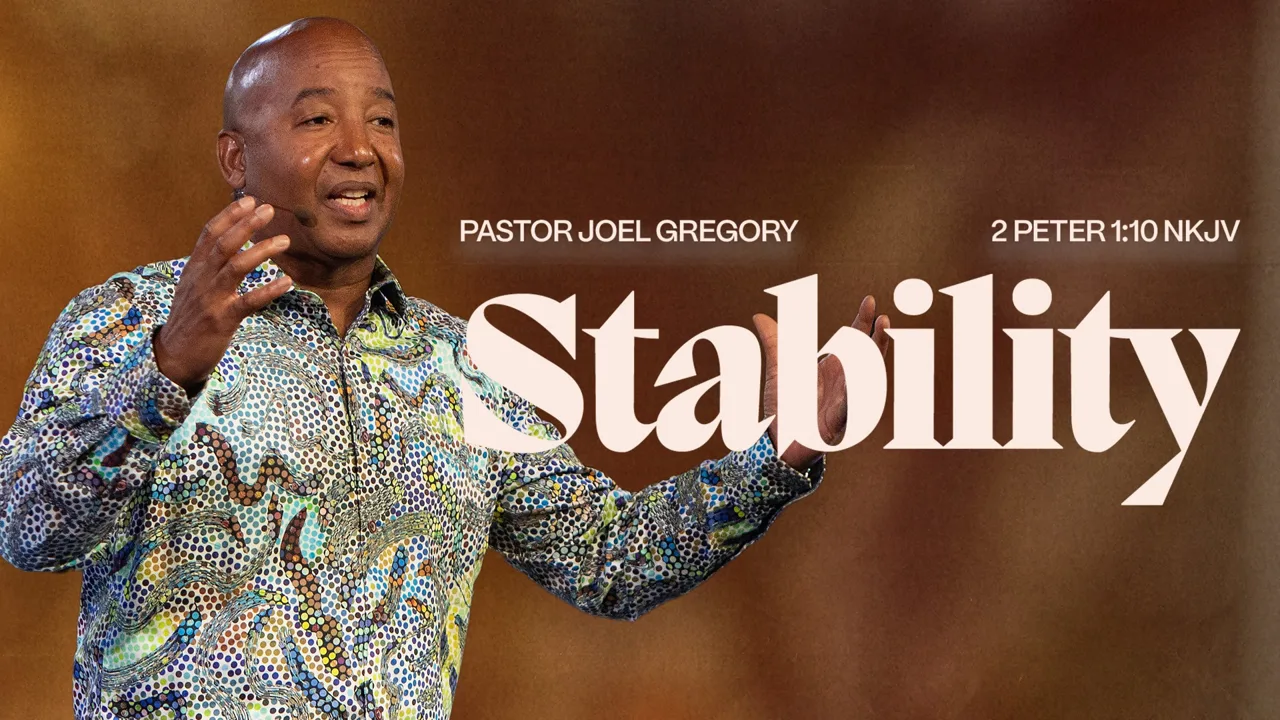
Stability Part 1
Sermon notes from Pastor Joel Gregory at Linked UP Church on building a life that won't stumble, growing in the knowledge of God, and developing spiritual stability.
Stability Part 1
Pastor Joel Gregory
Linked UP Church
Building a life that won't stumble.
This series grew out of Connect 40, or 40 days in the Word, with a focus on continuing to develop in the knowledge of God and Jesus Christ.
3 His divine power has given us everything we need for life and godliness through the knowledge of Him who called us by His own glory and excellence.
4 Through these He has given us His precious and magnificent promises, so that through them you may become partakers of the divine nature, now that you have escaped the corruption in the world caused by evil desires.
5 For this very reason, make every effort to add to your faith virtue; and to virtue, knowledge;
6 and to knowledge, self-control; and to self-control, perseverance; and to perseverance, godliness;
7 and to godliness, brotherly kindness; and to brotherly kindness, love.
8 For if you possess these qualities and continue to grow in them, they will keep you from being ineffective and unproductive in your knowledge of our Lord Jesus Christ.
9 But whoever lacks these traits is nearsighted to the point of blindness, having forgotten that he has been cleansed from his past sins.
10 Therefore, brothers, strive to make your calling and election sure. For if you practice these things you will never stumble,
Grace and Peace Can Be Multiplied
Grace includes benefit, favor, graciousness, gratitude, and gift. Peace includes prosperity, wholeness, quietness, rest, and being set at one again.
To multiply means to increase or abound. God wants us to increase in these areas, but Peter connects that increase to the knowledge of God and Jesus our Lord.
Get to Know God Better
The word for knowledge, epignosis, carries the meaning of full discernment or complete knowledge.
Study the Old Testament to learn about God. Study the Gospels and the New Testament to learn about Jesus.
The amount of grace and peace we walk in is connected to how much we know about God and Jesus. If we want more, we have to get to know them better.
God Doesn't Just Want You Saved
He wants you stable.
Salvation gives us new life. Spiritual maturity teaches us how to live that life.
Peter's promise about not stumbling has a condition: doing the things he describes. We may be accustomed to stumbling, but God calls us to develop beyond that pattern.
One Plus Seven
Peter gives eight qualities that produce stability. We begin with faith, and even that faith can be developed. The other seven qualities must also be developed.
- Faith
- Virtue
- Knowledge
- Self-control
- Perseverance
- Godliness
- Brotherly kindness
- Love
Faith is the starting point, not the stopping point. Peter tells us to add to it.
The Pattern of Seven and Eight
Pastor Gregory described seven as representing completion or perfection, as in the seven days of creation. Eight, coming after seven, represents a fresh start or a new cycle.
- Eight people entered Noah's ark: Noah, his wife, their three sons, and their wives. They survived the flood and stepped onto a clean earth to begin again.
- God instructed Abraham that baby boys were to be circumcised on the eighth day, marking their covenant with God.
The encouragement: your next season can be greater than the last as you develop these eight qualities.
Stability Is Developed
Spiritual stability is not accidental. People who live stable spiritual lives have developed to get there.
God loves all His children. The opportunity to develop is available, but not everyone takes advantage of it.
Stability: the ability to remain firm, consistent, balanced, and established even when circumstances around you change.
Standing When Trouble Comes
A stable believer is not someone who never experiences trouble. A stable believer has learned how to remain standing when trouble comes.
They remain firm on what God said, regardless of what their circumstances present.
8 His heart is assured; he does not fear, until he looks in triumph on his foes.
Bad News: Fear or Faith?
Everyone receives bad news at some point. The person described in this psalm receives it but chooses not to fear because their heart is steadfast, trusting in the Lord.
When bad news comes, we can respond in fear or in faith.
There may be times when you do not know what to do next. You can still know that you trust God.
Established on the Inside
The goal is not to build a life where nothing ever shakes around you. The goal is to become so established in God that what shakes around you does not have to shake what is inside you.
Reject fear when it arrives. You do not have to accept every package delivered to your door.
Steadfast and established: that is the picture of true stability.
Preparation and Provision
In explaining steadfastness, Pastor Gregory emphasized standing, making preparation, and making provision.
A stable person considers what life may present and prepares for it.
Being established includes being able to lean upon, bear up, and be sustained by those preparations and provisions.
A Practical Example: Financial Preparation
Pastor Gregory encouraged heads of households to keep at least 90 days of living expenses saved, then work toward six months and eventually a year.
Living paycheck to paycheck leaves a household vulnerable to a single car repair or unexpected expense.
He shared that when he and his wife lost everything 13 years earlier, having roughly a year's living expenses set aside gave them room to remain calm, pray, and consider their next steps while continuing to care for their children.
Why Do Believers Stumble?
Stumbling carries the idea of tripping, losing your footing, being caught in a trap, or falling spiritually.
Areas where people stumble include:
- Temptation and offense
- Uncontrolled emotions
- Wrong relationships
- Discouragement and disappointment
- Financial pressure
- Pride and isolation
- Weariness and compromise
- A lack of spiritual discipline
You Don't Have to Clap Back
A stable person knows who they are in Christ. Every disrespectful comment does not require a response.
Pastor Gregory compared this to a lion remaining at rest while dogs bark around it. The lion is not threatened by their noise.
Stop getting offended over every little thing people say. Let your life speak.
Whatever you compromise to get, you will have to compromise to keep.
The Enemy Looks for Unstable Areas
In a demonstration, Minister David stood with a wide, stable base and resisted being moved. Standing on one leg made him easier to push.
The illustration showed how areas such as loneliness, pride, fear, unforgiveness, isolation, and financial unpreparedness can leave a person vulnerable.
Developing the eight qualities strengthens your foundation and brings stability.
Add to Your Faith
Buying a house is one thing. Finishing and furnishing it is something else.
You can own the house and still have only a television and two folding chairs inside. You have started, but there is more to develop.
In the same way, faith is the beginning. Peter tells us to keep adding.
4 Through these He has given us His precious and magnificent promises, so that through them you may become partakers of the divine nature, now that you have escaped the corruption in the world caused by evil desires.
5 For this very reason, make every effort to add to your faith virtue; and to virtue, knowledge;
The Foundation: Faith, Virtue, and Knowledge
These qualities appear in an order and build upon one another.
Pastor Gregory identified faith, virtue, and knowledge as the foundation of stability.
He connected God's divine power with the death, burial, and resurrection of Jesus Christ, through which God has provided what we need for life and godliness.
Already Provided
Life was explained as the God-kind of life, or life as God intended it. Godliness was described as God-likeness.
The message's central question: if God has already provided what pertains to life and godliness, why are we not walking in it?
Peter again connects receiving that provision with knowing the One who called us.
The Prepared Parent
Pastor Gregory compared God's provision to parents who have prepared for their children's transportation, education, and future needs.
The provision may already be there, but the child's choices, relationship with the parents, and response to their requirements affect what the child receives.
Provision being available does not mean a person will automatically walk in it.
You're Walking in What You Know
What we do not know can keep us from walking in what God has provided.
Pastor Gregory described studying what God says about marriage and money, then applying and obeying what he learned.
We can ask God to do what He has already done while neglecting to know Him. Knowing God is not simply collecting information. It includes responding to what He says.
Knowledge Must Affect the Relationship
Knowing what matters to your spouse does not help the relationship if you continually ignore it.
Pastor Gregory used marriage to illustrate the connection between knowledge, treatment, and the benefits of a relationship.
Listening to what matters to someone and acting on it shows respect. The message asks us to consider whether we treat God the same way we treat people.
Called to Glory and Virtue
Glory: something seen or manifested.
Virtue: moral excellence.
God wants moral excellence on display so that people can see what He is like through our lives.
How we live each day shows others something about the God we represent.
God Uses His Promises
A promise was described as a self-commitment and an assurance of conferring good.
Pastor Gregory emphasized that God uses His promises, rather than pain, sickness, disease, or job loss, to teach and encourage His children.
He compared this to parents promising good things to their children and following through, encouraging them to continue doing what is right.
Partakers of the Divine Nature
God gives both His divine power and His divine nature. His nature refers to His characteristics.
Through His promises, He draws us toward becoming more like Him.
Pastor Gregory shared that seeing God fulfill His promises makes him want to draw closer, obey, and continue honoring God with his tithe, as he has since age 22.
An Illustration: Provision and Knowledge
During the sermon, Pastor Gregory offered gas money to people who could quote a verse about financial provision.
The illustration was that the money had already been provided, but receiving it involved knowing and responding.
Several references arose in the exchange. He identified Ephesians 3:20 as a prayer passage rather than the financial verse requested. Luke 6:38 was used, and Proverbs 13 and Romans 13 were also mentioned, without specific verses preserved in the transcript.
2 From the fruit of his lips a man enjoys good things, but the desire of the faithless is violence.
3 He who guards his mouth protects his life, but the one who opens his lips invites his own ruin.
4 The slacker craves yet has nothing, but the soul of the diligent is fully satisfied.
5 The righteous hate falsehood, but the wicked bring shame and disgrace.
6 Righteousness guards the man of integrity, but wickedness undermines the sinner.
7 One pretends to be rich, but has nothing; another pretends to be poor, yet has great wealth.
8 Riches may ransom a man’s life, but a poor man hears no threat.
9 The light of the righteous shines brightly, but the lamp of the wicked is extinguished.
10 Arrogance leads only to strife, but wisdom is with the well-advised.
11 Dishonest wealth will dwindle, but what is earned through hard work will be multiplied.
12 Hope deferred makes the heart sick, but desire fulfilled is a tree of life.
13 He who despises instruction will pay the penalty, but the one who respects a command will be rewarded.
14 The teaching of the wise is a fountain of life, turning one from the snares of death.
15 Good understanding wins favor, but the way of the faithless is difficult.
16 Every prudent man acts with knowledge, but a fool displays his folly.
17 A wicked messenger falls into trouble, but a faithful envoy brings healing.
18 Poverty and shame come to him who ignores discipline, but whoever heeds correction is honored.
19 Desire fulfilled is sweet to the soul, but turning from evil is detestable to fools.
20 He who walks with the wise will become wise, but the companion of fools will be destroyed.
21 Disaster pursues sinners, but prosperity is the reward of the righteous.
22 A good man leaves an inheritance to his children’s children, but the sinner’s wealth is passed to the righteous.
23 Abundant food is in the fallow ground of the poor, but without justice it is swept away.
24 He who spares the rod hates his son, but he who loves him disciplines him diligently.
25 A righteous man eats to his heart’s content, but the stomach of the wicked is empty.
2 Consequently, whoever resists authority is opposing what God has set in place, and those who do so will bring judgment on themselves.
3 For rulers are not a terror to good conduct, but to bad. Do you want to be unafraid of the one in authority? Then do what is right, and you will have his approval.
4 For he is God’s servant for your good. But if you do wrong, be afraid, for he does not carry the sword in vain. He is God’s servant, an agent of retribution to the wrongdoer.
5 Therefore it is necessary to submit to authority, not only to avoid punishment, but also as a matter of conscience.
6 This is also why you pay taxes. For the authorities are God’s servants, who devote themselves to their work.
7 Pay everyone what you owe him: taxes to whom taxes are due, revenue to whom revenue is due, respect to whom respect is due, honor to whom honor is due.
8 Be indebted to no one, except to one another in love. For he who loves his neighbor has fulfilled the law.
9 The commandments “Do not commit adultery,” “Do not murder,” “Do not steal,” “Do not covet,” and any other commandments, are summed up in this one decree: “Love your neighbor as yourself.”
10 Love does no wrong to its neighbor. Therefore love is the fulfillment of the law.
11 And do this, understanding the occasion. The hour has come for you to wake up from your slumber, for our salvation is nearer now than when we first believed.
12 The night is nearly over; the day has drawn near. So let us lay aside the deeds of darkness and put on the armor of light.
13 Let us behave decently, as in the daytime, not in carousing and drunkenness, not in sexual immorality and debauchery, not in dissension and jealousy.
14 Instead, clothe yourselves with the Lord Jesus Christ, and make no provision for the desires of the flesh.
Know God for Yourself
Going to church is good, but you must also know God for yourself.
The gas-money illustration returned to the sermon's central point: provision was available, and knowledge mattered in receiving it.
What you do not know can hold you back.
Promises Help Us Escape Corruption
God's promises also help us escape the corruption in the world through lust.
Pastor Gregory described returning to a simple question when temptation appears: is this worth all that God has provided in my life?
Remembering God's goodness gives him a base from which to resist temptation. He spoke of valuing health as well as provision, wanting both the resources and the health to enjoy life.
Where Part 1 Leaves Us
Give diligence to developing what Peter describes. Begin with faith, add virtue, and add knowledge.
The next message will continue with this foundation.
Keep building on the time spent in the Word. Continue getting to know God and His Son.
Closing Prayer
Father, give us a greater revelation of how important it is to know You and Your Son. Through that knowledge, help us walk in everything You have provided that pertains to life and godliness.
Help us build on 40 days in the Word and continue spending time daily getting to know You. Help us escape the corruption in the world through lust.
Continue to manifest Your promises as we obey You, and show Yourself strong on our behalf. In Jesus' name, amen.
Invitation to Respond
Pastor Gregory closed with three invitations:
- Receive Jesus Christ as your personal Lord and Savior.
- Return to Christ and rededicate your life.
- Join Linked UP Church if you believe God is leading you there.
The first step is a personal relationship with God through His Son, Jesus Christ.
Prayer of Salvation
Dear Heavenly Father, I believe that Jesus Christ is the Son of God. I believe that He died, rose from the grave, and is alive right now.
Lord Jesus, come into my heart and save me now. As a result of what I have confessed with my mouth and what I believe in my heart, I am right now born again and in right standing with God. All my sins are forgiven. In Jesus' name, amen.
Connection and Follow-Up
Those responding were invited to receive prayer and follow-up from the ministry team. A Connect Card was available for those who preferred not to come forward.
Online viewers were invited to connect with the church's online community, subscribe to its YouTube channel, share the service, follow on social media, and return for Sunday services.
The service concluded with an invitation to give in support of connecting people to God, their families, their purpose, and their communities.