Most Christians Don't Live What They Believe
Sermon notes from Dr. Conway Edwards at One Community Church on closing the gap between belief and behavior through devotion to God's Word, fellowship, generosity, and mission.
What we live versus what Scripture says
Dr. Conway Edwards opens with an intentionally fictional picture of church: people gather when convenient, watch the stage, listen to a message, take communion, and hurry out.
That is not what the Bible says. His challenge is to recognize how easily church becomes something we attend rather than a community to which we are devoted.
43 A sense of awe came over everyone, and the apostles performed many wonders and signs.
44 All the believers were together and had everything in common.
45 Selling their possessions and goods, they shared with anyone who was in need.
46 With one accord they continued to meet daily in the temple courts and to break bread from house to house, sharing their meals with gladness and sincerity of heart,
47 praising God and enjoying the favor of all the people. And the Lord added to their number daily those who were being saved.
They devoted themselves
The most important word is devoting. These believers were not casually interested. They devoted themselves to the apostles' teaching, fellowship, the breaking of bread, and prayer.
They shared what they had, met needs, gathered in the temple and in homes, and ate together with gladness. Their life together inspired awe, and the Lord added to their number daily.
What you have is not only for you
The believers shared voluntarily. When they saw a need, they were willing to use their possessions to meet it.
God's blessings are not simply ours to keep. He gives so that he can use us to bless somebody else.
Meeting in homes also meant people knew one another and could hold one another accountable to live what they were learning. Isolation cannot replace that shared life.
Be careful we do not drift
Church hurt, dysfunction, isolation, and consumer Christianity can leave us with a low view of church.
Consumer Christianity asks, “What's in it for me?” The church pictured in Acts gives us a higher view: people devoted to God and responsible for one another.
We must be careful not to become something God never intended his church to be.
Healthy big means doing small great
“If we're going to be healthy big, then we have to do small great.”
This is the phrase Dr. Edwards gives One Community Church to guide its next two years.
Growth must not come at the expense of knowing people, caring for them, helping them apply Scripture, and making sure nobody walks alone.
Remember how we began
One Community Church began with eight people meeting in a hotel, seeking to love God, pray, and live out the church pictured in Acts.
Dr. Edwards recalls welcoming a struggling married couple into his home so they could receive help practicing what they heard in God's Word. Eighteen years later, that couple was still together and fighting for their marriage.
Hearing the Word mattered. Having people help them live it mattered too.
Do not let people fall through the net
As the church grew, the holes in the net grew too. People arrived isolated and left without anyone speaking to them. Some were baptized but never discipled. Some groups became comfortable and stopped welcoming others.
The holes should let water through, not fish.
Each person must take responsibility for the people around them, rather than leaving all care to pastors and staff.
Take responsibility for your row
Look at the people around you and ask, “God, how do you want me to minister to this person?”
If someone comes alone, help make sure they do not leave alone. If someone wants to know Jesus, you can tell them what he has done for you.
Dr. Edwards asks: Why should God entrust us with more people if we are not caring for those he has already sent?
The gap between belief and behavior
Dr. Edwards cites research describing a decline in practicing Christianity. He reports a drop from roughly half of Americans 25 years earlier to 24%, and describes only about a quarter of Christians allowing faith to shape the whole of life.
The concern is the widening gap between what people say they believe and how they live.
Faith should shape our decisions, priorities, relationships, finances, and worldview.
Do not cheapen grace
Dr. Edwards contrasts Christian inconsistency with the visible commitment he observed among Muslim girls playing soccer in clothing that reflected their beliefs, even in intense heat.
His challenge is consistency: do our actions reflect what we say we believe?
“Jesus, I know you'll forgive me tomorrow, so I'm going to take advantage of your grace today” must not become our way of life.
Information is not transformation
Dr. Edwards explains the decision not to stream women's Bible study at the same time as the gathering: he does not want people to become accustomed to receiving truth without accountability to apply it.
We need people who will ask:
- What did you learn?
- What are you going to apply?
The goal is not entertainment or convenience. It is alignment with God's Word.
Faithfulness matters more than size
You cannot love Jesus while rejecting his bride, the church.
Church size is not what matters most. Faithfulness is.
The issue is not how many people gather. The issue is what those people are devoted to once they gather.
Devotion is a deep commitment
Devotion means a deep commitment to someone or something. A person training for a marathon cannot prepare by running occasionally. The commitment shapes what they eat, how they train, and how they spend their time.
Dr. Edwards also points to the lengths people go to watch the World Cup. We understand devotion when something matters deeply to us.
Does our commitment to God shape our lives that way?
Conviction must lead to practice
A decline in conviction creates a decline in practice.
Do not listen only to people who tell you what you want to hear. Empty inspirational promises cannot replace the Word of God.
This is not a demand for perfection. When you fail, own it and ask a group of believers, “Will you help me live out what I say I believe?”
A hungry church: devoted to the Word
God's Word must be our daily lifeline. We need to know it, store it in our hearts, and open it for ourselves.
When the valley comes, we need the truth already planted within us.
Do not depend entirely on someone else's time with God. Whatever pastor is preaching, ask, “God, what do you have for me today so I can live this out?”
2 And by the seventh day God had finished the work He had been doing; so on that day He rested from all His work.
3 Then God blessed the seventh day and sanctified it, because on that day He rested from all the work of creation that He had accomplished.
4 This is the account of the heavens and the earth when they were created, in the day that the LORD God made them.
5 Now no shrub of the field had yet appeared on the earth, nor had any plant of the field sprouted; for the LORD God had not yet sent rain upon the earth, and there was no man to cultivate the ground.
6 But springs welled up from the earth and watered the whole surface of the ground.
7 Then the LORD God formed man from the dust of the ground and breathed the breath of life into his nostrils, and the man became a living being.
8 And the LORD God planted a garden in Eden, in the east, where He placed the man He had formed.
9 Out of the ground the LORD God gave growth to every tree that is pleasing to the eye and good for food. And in the middle of the garden were the tree of life and the tree of the knowledge of good and evil.
10 Now a river flowed out of Eden to water the garden, and from there it branched into four headwaters:
11 The name of the first river is Pishon; it winds through the whole land of Havilah, where there is gold.
12 And the gold of that land is pure, and bdellium and onyx are found there.
13 The name of the second river is Gihon; it winds through the whole land of Cush.
14 The name of the third river is Hiddekel; it runs along the east side of Assyria. And the fourth river is the Euphrates.
15 Then the LORD God took the man and placed him in the Garden of Eden to cultivate and keep it.
16 And the LORD God commanded him, “You may eat freely from every tree of the garden,
17 but you must not eat from the tree of the knowledge of good and evil; for in the day that you eat of it, you will surely die.”
18 The LORD God also said, “It is not good for the man to be alone. I will make for him a suitable helper.”
19 And out of the ground the LORD God formed every beast of the field and every bird of the air, and He brought them to the man to see what he would name each one. And whatever the man called each living creature, that was its name.
20 The man gave names to all the livestock, to the birds of the air, and to every beast of the field. But for Adam no suitable helper was found.
21 So the LORD God caused the man to fall into a deep sleep, and while he slept, He took one of the man’s ribs and closed up the area with flesh.
22 And from the rib that the LORD God had taken from the man, He made a woman and brought her to him.
23 And the man said: “This is now bone of my bones and flesh of my flesh; she shall be called ‘woman,’ for out of man she was taken.”
24 For this reason a man will leave his father and mother and be united to his wife, and they will become one flesh.
25 And the man and his wife were both naked, and they were not ashamed.
A loving church: devoted to fellowship
Dr. Edwards connects God's declaration that it was not good for Adam to be alone with the believer's need for community.
He describes koinonia as gathering with Jesus at the center. Without Jesus at the center, a group is simply a social gathering.
We cannot live out the “one another” responsibilities alone. Loving, encouraging, correcting, and fighting for one another require other people.
Not a vending machine
Church is not a vending machine where we select a favorite teacher or Bible study, receive what we want, and leave.
Dr. Edwards contrasts that picture with a shared table: everybody brings something so that anyone who does not have can receive.
We gather because we care about one another and want to help each other apply what we have heard. Without accountability, we tend to do whatever we feel like doing in the moment.
A generous church: meeting needs
Devotion to the Word and fellowship should produce generosity. When someone in the community has a need, those with more can help.
Dr. Edwards tells of an intern who set aside $100 to bless someone. When he met a man without a place to stay, he used it to help provide a hotel room for the night.
Generosity should be normal among people in whom the Holy Spirit lives.
Generosity flows through grace
If you believe everything you have came entirely from your own effort, you will struggle to release it.
But when you recognize that you are where you are because of God's grace and mercy, generosity makes sense.
Understanding grace changes how tightly we hold what God has given us.
Mission grows from a shared life
When believers follow the Word, hold one another accountable, and live generously, people notice something they cannot explain.
That opens the door for conversations about Jesus.
One Community Church must not become a drive-by church. The aim is for people to be fully known, fully loved, and never left to walk alone. We will not get everything right, but we must keep pursuing it.
Four movements of a healthy church
The church is at its best when every believer moves:
- From attendance to devotion.
- From consumption to contribution.
- From isolation to community.
- From hearing the Word to living it.
When the awe is gone
- Teaching becomes facts rather than truth that transforms.
- Fellowship becomes a social gathering without Jesus at the center.
- Generosity becomes philanthropy pursued for personal benefit rather than kingdom purposes.
- Evangelism becomes a sales pitch rather than an authentic account of a changed life.
Jesus does not merely touch up the old life. He changes who we are.
Churches can drift
Dr. Edwards describes churches that needed correction:
- Corinth: fleshly living brought corruption and dysfunction.
- Galatia: legalism distorted their life together.
- Colossae: false teaching produced an inadequate view of Christ.
- Thessalonica: laziness became a problem that needed confronting.
A strong beginning does not remove the need for correction and renewed faithfulness.
A Spirit-filled believer
A Spirit-filled believer is continually devoted to the Word, one another, generosity, and mission.
Dr. Edwards asks each listener to examine whether that describes their life.
If you have been discipled, it is your turn to disciple somebody else. We cannot be content to see people baptized without helping them grow.
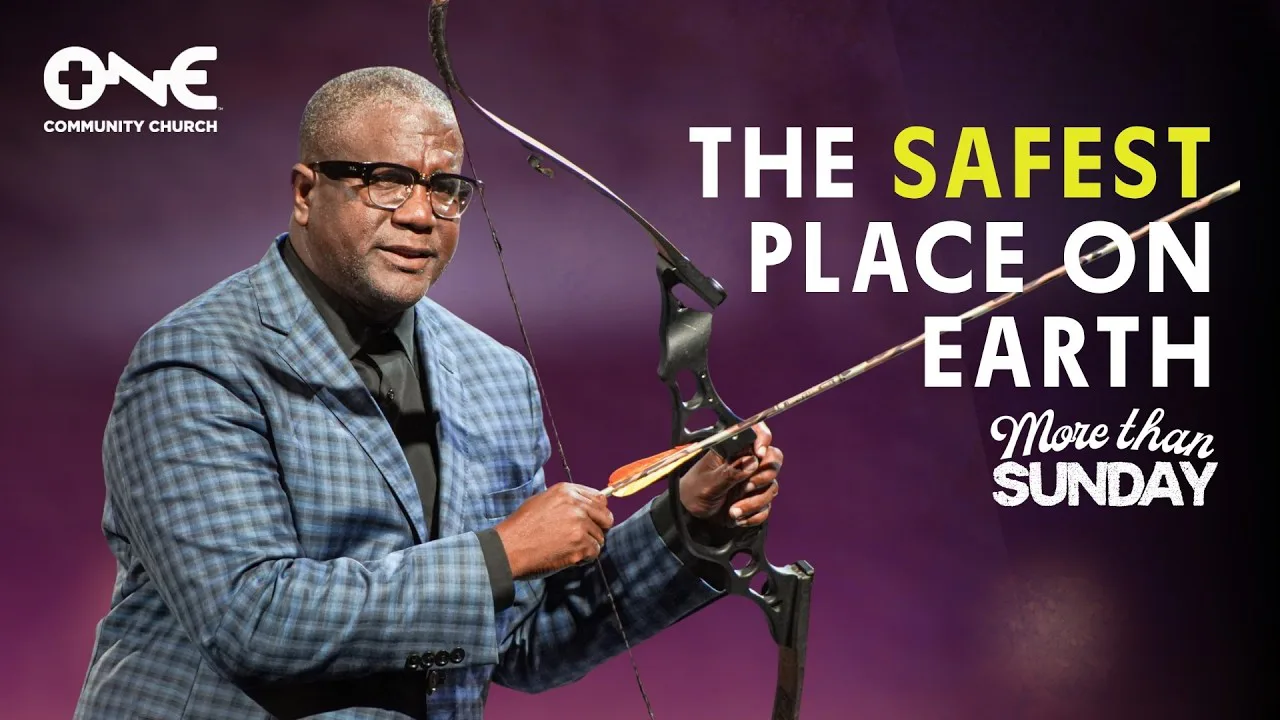
“Hey, arrow, are you in flight?”
Dr. Edwards pictures each believer as an arrow in the Lord's hands. A mature believer notices arrows on the ground and helps launch them into flight.
Ask someone what God is doing in their life. Talk with them about Jesus. Invite them into a small group. Help them take their next step.
This is not only the pastor's, staff's, or volunteers' responsibility. It belongs to everybody.
Recommit to the church pictured in Acts
Dr. Edwards invites the church to pause and pray, recommitting to God's Word, fellowship, and generosity.
Doing small great means finding people who are not in community groups, discipling those who have not been discipled, answering calls, and returning them.
The gap between belief and behavior should be getting smaller, not larger. Our devotion should affect our decisions, priorities, friendships, worldview, and finances.
Closing prayer
Father, help us close the gap between what we believe and how we live. We will not be perfect, but help us keep pursuing faithfulness.
Raise our view of your church. Help us be devoted to your Word, to fighting for one another, and to generosity.
Help us not settle for isolation, but fight for community; not settle for hearing the Word, but be transformed by it. Thank you for being gracious. In Jesus' name, amen.