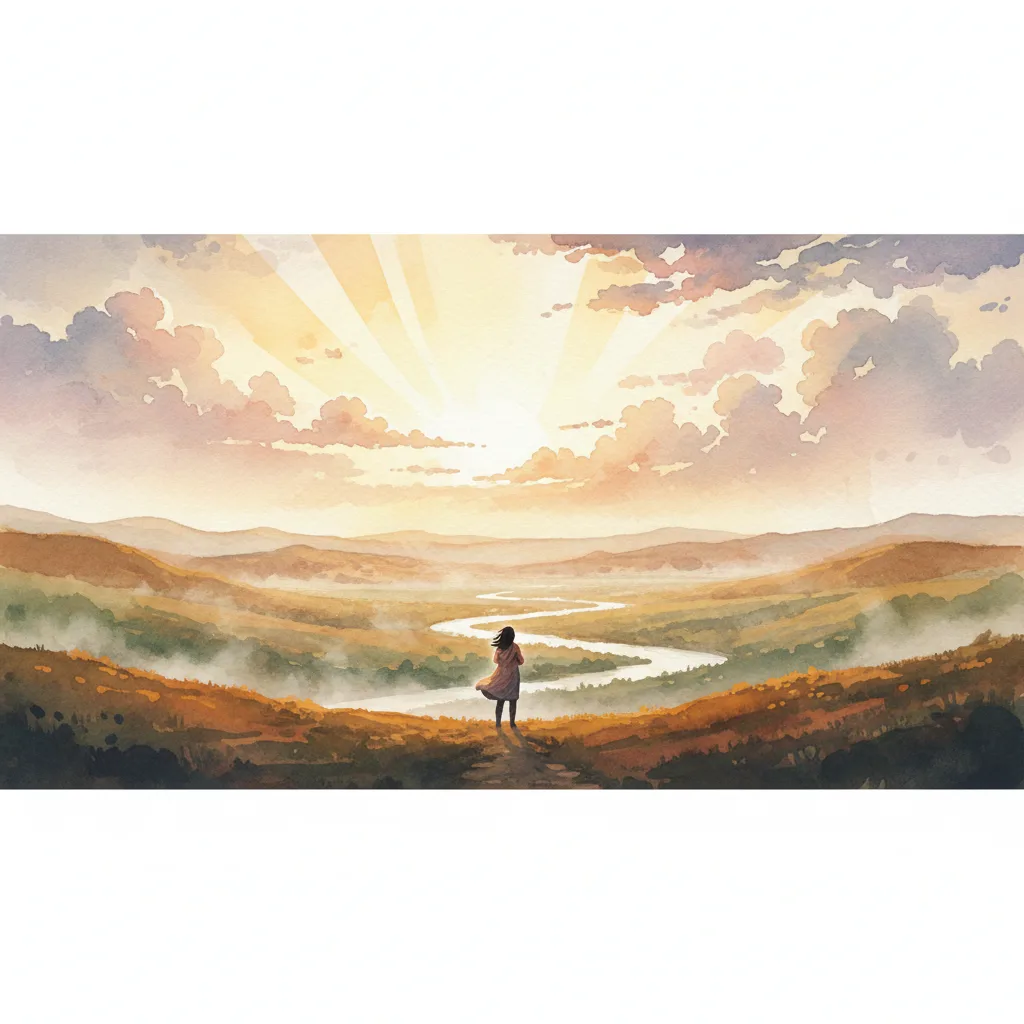

Beyond Certainty: Faith's Resilience in Honest Question
Many of us encounter seasons where faith feels tenuous, questions multiply, and certainty wavers. This deck explores how honest doubt isn't necessarily faith's enemy, but often a pathway to a deeper, more resilient trust in God. We'll look at biblical examples, understand the nature of doubt, and discover practical ways to navigate these unsettling times with grace and conviction.
Good morning, brothers and sisters. Today, we're diving into a topic that touches nearly every thoughtful believer at some point: the challenging, yet often profound, experience of doubt. It's easy to assume that doubt is antithetical to faith, a sign of spiritual failure, or something to be hidden away. But what if doubt, when approached with honesty and an open heart, can actually serve as a gateway to a deeper, more resilient faith?
We’re not talking about a cynical, dismissive unbelief, but rather the genuine questioning, the wrestling with life's complexities and God's apparent silences. This is a common human experience, even for those whose lives are deeply rooted in conviction. Let’s explore how scripture and the life of faith invite us to engage with our uncertainties.
8 Is His loving devotion gone forever? Has His promise failed for all time?
9 Has God forgotten to be gracious? Has His anger shut off His compassion?” Selah
10 So I said, “I am grieved that the right hand of the Most High has changed.”
In Psalm 77, we find a psalmist grappling with profound distress and doubt. He asks, “Has God forgotten to be gracious? Has he in anger shut up his compassion?” These aren't just surface-level questions; they're gut-wrenching cries from a soul in anguish. What this Psalm demonstrates so beautifully is that God is not threatened by our honest questions. He invites us to bring our deepest fears, our confusion, and our uncertainties directly to him. The raw honesty of the psalmist legitimizes our own struggles.
This is a model for us: instead of suppressing our doubts, we can articulate them to the God who promises to hear us. It’s in this vulnerable space that we often begin to perceive God’s enduring faithfulness in new, powerful ways.
25 So the other disciples told him, “We have seen the Lord!” But he replied, “Unless I see the nail marks in His hands, and put my finger where the nails have been, and put my hand into His side, I will never believe.”
26 Eight days later, His disciples were once again inside with the doors locked, and Thomas was with them. Jesus came and stood among them and said, “Peace be with you.”
27 Then Jesus said to Thomas, “Put your finger here and look at My hands. Reach out your hand and put it into My side. Stop doubting and believe.”
28 Thomas replied, “My Lord and my God!”
29 Jesus said to him, “Because you have seen Me, you have believed; blessed are those who have not seen and yet have believed.”
Perhaps the most famous doubter in scripture is Thomas. He wasn't present when Jesus first appeared to the disciples after the resurrection, and he declared, “Unless I see in his hands the mark of the nails, and place my finger into the mark of the nails, and place my hand into his side, I will never believe.” Eight days later, Jesus appears again, and his first action is to address Thomas directly, inviting him to touch his wounds.
What does this tell us? Jesus doesn't rebuke Thomas's need for evidence; he graciously provides it. This isn't just about a historical event; it's a testament to Christ's profound patience and understanding of the human heart's struggle with belief. He meets us where we are, even in our demanding doubts, drawing us toward faith.
It's crucial to distinguish between honest, seeking doubt and a cynical, dismissive unbelief. Honest doubt is characterized by a desire to understand, to find truth, even if it’s uncomfortable. It asks questions like, “How can this be true?” or “Where is God in this suffering?” This kind of doubt often stems from a genuine intellectual or emotional struggle, and it seeks resolution.
Unbelief, on the other hand, often manifests as a hardened heart, a stubborn refusal to consider evidence, or a desire to discredit without genuine inquiry. It’s less about seeking and more about rejecting. Our journey today focuses on the former: the doubt that can lead to deeper faith.
Here, we find the father of a demon-possessed boy crying out to Jesus, “I believe; help my unbelief!” What a profound and honest confession. This man perfectly encapsulates the experience many of us have: a heart that genuinely desires to believe, yet still struggles with significant internal resistance. He doesn't pretend to have perfect faith; he acknowledges the tension within him and brings it directly to Jesus.
This isn't just a quaint story; it's a profound theological insight. It teaches us that faith isn't the absence of doubt, but rather holding on to God even when doubt is present. And even more importantly, it shows us that Jesus is eager to help us in that very tension. Our faith, even when weak, is enough for him to work.
So, what do we actually do when doubt arises? When the questions seem louder than the answers, and certainty feels elusive? Here are a few practical steps:
- Acknowledge It Honestly: Don't suppress your doubts. Bring them to God in prayer, talk about them with a trusted mentor or friend.
- Engage Scripture Deliberately: Revisit foundational truths. Immerse yourself in the story of God’s faithfulness, even when your feelings waiver.
- Seek Godly Community: Surround yourself with brothers and sisters who can walk alongside you, offer wisdom, and pray with you. Shared struggle makes the burden lighter.
- Remember God's Character: While particular answers might be unclear, hold fast to what we know of God’s love, justice, and sovereignty, even when circumstances tempt you to question it.
Hebrews 11:1 famously defines faith as “the assurance of things hoped for, the conviction of things not seen.” Notice what's missing here: the demand for absolute, empirical certainty. Faith operates precisely in the realm of the unseen and the hoped-for. If we had full certainty about everything, faith would be unnecessary.
Doubt, in a way, is simply bumping up against the 'not seen' aspect of faith. When we expect to 'see' everything perfectly, we invite frustration. True faith learns to live within this tension, trusting God’s character and promises even when the immediate vision is unclear. It’s a confidence rooted not in our perception, but in His reality.
Friends, God is not threatened by our questions. In fact, our honest wrestling can deepen our understanding of Him and forge a more authentic, resilient faith. Just like a muscle strengthens with resistance, our faith can grow stronger through seasons of doubt, if we allow God to meet us there.
So, if you find yourself in a season of questions, remember the psalmist, remember Thomas, remember the father who cried out for help with his unbelief. Bring your whole self to God—your belief and your doubt—and trust that he is faithful to meet you and lead you to a deeper, more profound assurance in Him.
39 neither height nor depth, nor anything else in all creation, will be able to separate us from the love of God that is in Christ Jesus our Lord.