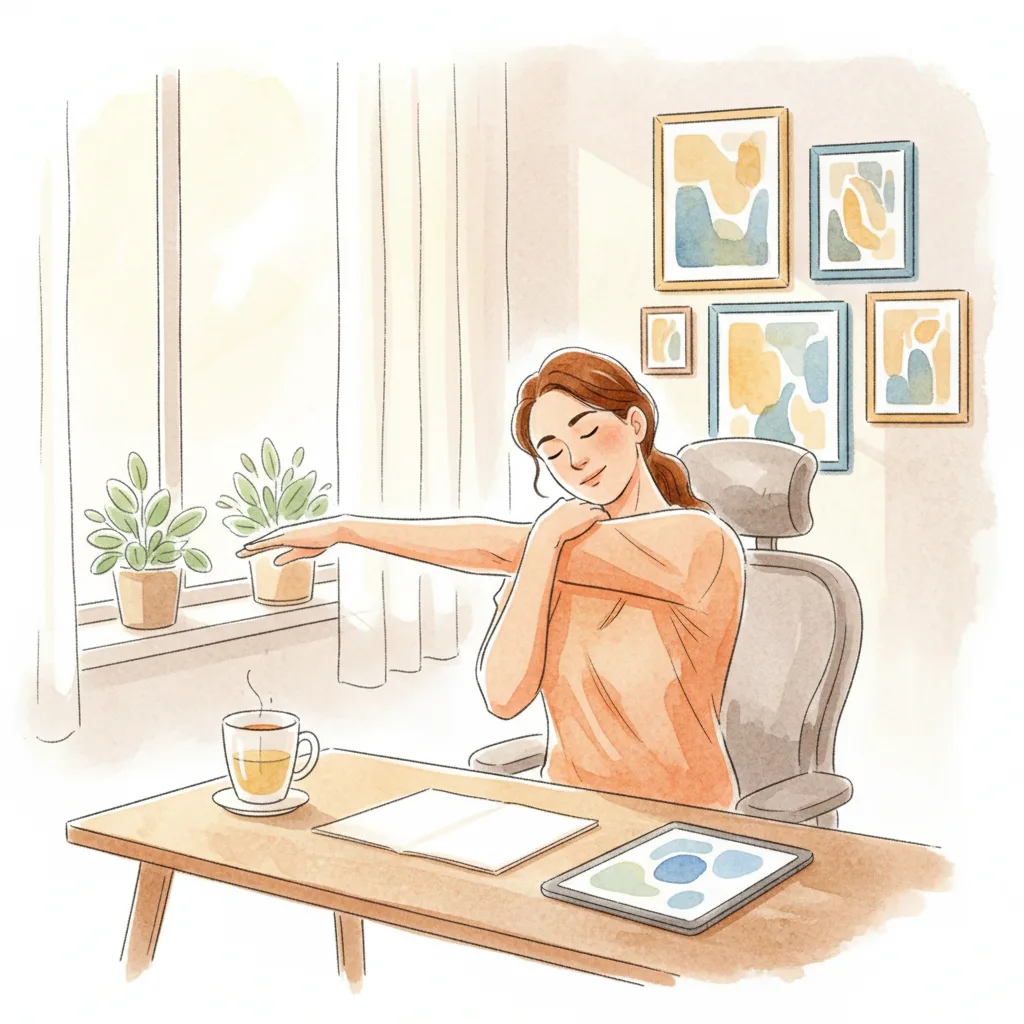

Active Alignment: Ditch Desk Slouch, Embrace Daily Strength
Tired of stiffness and aches? This deck offers a practical, evidence-based approach to reclaiming your posture and movement. Learn how to integrate simple, effective habits into your day to build a resilient, pain-free body.
Hello, I'm Dr. Miles Reynolds, and if you're reading this, chances are you've felt the toll of modern life on your body. Long hours at a desk, constant screen time, and less natural movement have conspired to create what I call the 'desk body'—stiff necks, rounded shoulders, tight hips, and nagging lower back pain. But here's the good news: you can change this. You don't need expensive gadgets or hours at the gym to reclaim your comfort and strength. You need practical, consistent strategies that work with your life, not against it.
Let's clear the air: there's no single 'perfect posture' to strive for. The idea that we should hold ourselves in a stiff, military-esque stance is not only unrealistic but often counterproductive. Our bodies are marvels of adaptability. What we're aiming for is optimal alignment—positions and movements that allow your joints and muscles to function with maximum efficiency and minimal strain. This means less 'holding' and more 'flowing.'
Why bother with 'active alignment'? It's not just about looking taller or more confident, though those are nice bonuses. Poor movement patterns contribute to chronic pain, reduced mobility, decreased energy levels, and even impaired breathing. By improving how you hold and move your body, you can prevent injuries, alleviate existing discomfort, enhance athletic performance, and simply feel better in your own skin, every single day.
Before we talk about 'fixing' your shoulders, let's talk about your breath. Diaphragmatic breathing—breathing deep into your belly rather than shallowly into your chest—is fundamental to core stability and postural support. It activates your deep core muscles, helps relax your nervous system, and sets a proper foundation for all movement. Take a moment right now: place one hand on your chest, one on your belly. Breathe in slowly. Which hand rises first? Aim for the belly hand.
Your workstation is a tool, not a sarcophagus. While ergonomic setups are important, remember that even the 'perfect' setup won't save you if you don't move. The goal isn't to find one static posture for eight hours, but to create an environment that encourages dynamic movement. Adjust your chair height, monitor level, and keyboard position so that you can comfortably shift and change positions throughout your workday.
You've heard of the 20-20-20 rule for your eyes? Let's apply a version to your body. Every 30-60 minutes, take 2-5 minutes to move. Stand up, walk to get water, do a few squats, gentle arm circles, or shoulder shrugs. These 'micro-breaks' prevent stiffness from accumulating, improve circulation, and re-engage dormant muscles. Set a timer, and commit to moving regularly.
The 'Tech Neck' Trap: Spending hours looking down at devices shortens the muscles in the front of your neck and lengthens those in the back, leading to pain and headaches. Try this: gently tuck your chin as if making a double chin, then glide your head straight back, imagining a string pulling the crown of your head upwards. Hold for a few seconds, relax. Repeat 10 times. This strengthens deep neck flexors and improves alignment.
Hip Flexor Release: Prolonged sitting shortens your hip flexors, pulling your pelvis into an anterior tilt and putting strain on your lower back. Combat this with a simple lunge stretch: kneel on one knee (pad it if needed), front foot flat. Gently push your hips forward until you feel a stretch in the front of the hip of the kneeling leg. Keep your core gently engaged. Hold for 30 seconds per side.
Your glutes are powerhouse muscles crucial for hip stability, walking, and spinal support. But they often go 'dormant' from too much sitting. Engage them! Simple glute bridges (lying on your back, knees bent, feet flat, lift hips off the floor) or even conscious squeezing of your glutes when standing or walking can wake them up and improve overall posture and pain resilience.
It's not just about stretching what's tight; it's also about strengthening what's weak. Often, muscles become 'tight' because they're overcompensating for other weak muscles. A balanced approach combines targeted mobility work with functional strength training. Think about building resilient movement patterns, not just isolated stretches.
Behavior change takes effort, but it gets easier. Start small. Pick one or two micro-movements or stretches from this deck and commit to doing them for a week. Link them to an existing habit—e.g., 'every time I stand up to get coffee, I'll do 5 chin tucks.' Celebrate your consistency, not just your perfection.
While these tips are broadly beneficial, they're not a substitute for professional medical advice. If you're experiencing chronic or severe pain, numbness, tingling, or if your symptoms worsen, it's crucial to consult a qualified healthcare professional—whether that's your medical doctor, a chiropractor, physical therapist, or other specialist. Don't self-diagnose; get an accurate assessment.
Your body is incredibly resilient and capable of change. By adopting an 'active alignment' mindset and integrating these practical strategies, you're not just correcting posture; you're building a more robust, pain-free, and energized version of yourself. Start today. Your future self will thank you.